
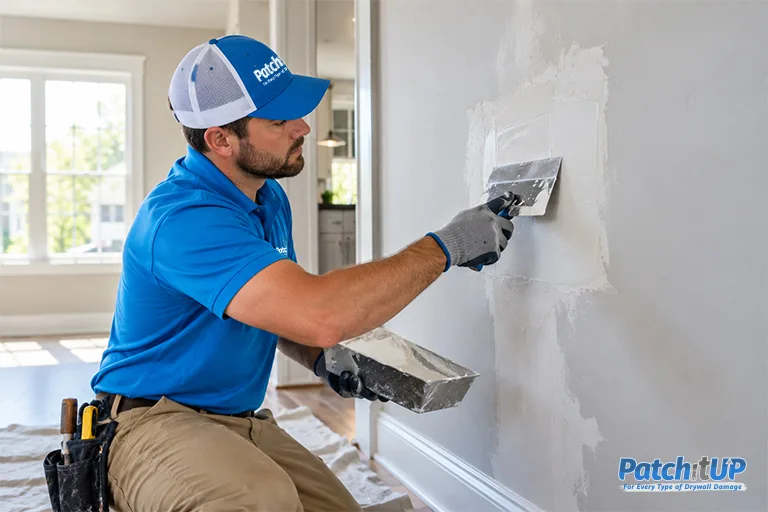
Summary
Starting a drywall repair business puts you into a $518 billion home-improvement market, since every homeowner eventually needs a wall or ceiling fixed. You can start small on your own for a few thousand dollars, or step into a system that’s already built. Either way, understand the market and the money first, then start with the smallest version of the business you can.
So You Want to Start a Drywall Repair Business
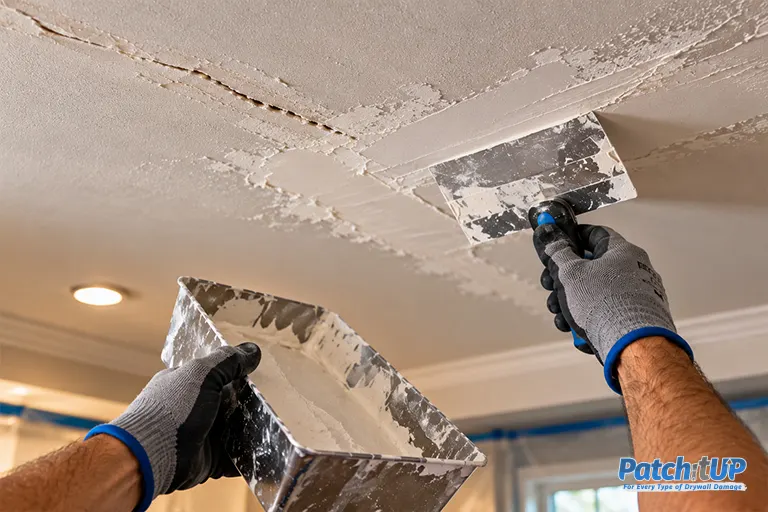
If you’re searching for how to start a drywall repair business, you’re probably good with your hands and tired of doing this work for someone else. Good news: drywall repair has a low barrier to entry. No four-year degree, no huge equipment list, just steady demand.
That demand holds up better than most trades for a drywall repair business. Homeowner repair and improvement spending is on pace to hit $518 billion in 2026 (Harvard Joint Center for Housing Studies), and cracks, holes, and water damage don’t wait for a good economy.
Roofers slow down in winter. Walls keep getting damaged year-round.
What You Can Realistically Earn
Here’s the honest range. Drywall and ceiling tile installers earned a median $59,780 a year, or $28.74 an hour, in the latest Bureau of Labor Statistics data. About 19% already run their own show.
That’s the floor, not the ceiling. Add repeat commercial accounts and a real operating system to a drywall repair business, and the number climbs fast: businesses built on PatchitUP’s franchise model average $816,117 in gross revenue per unit (franzy.com FDD analysis). The gap is volume and systems, not luck.
Getting Started: License, Skills, and Budget
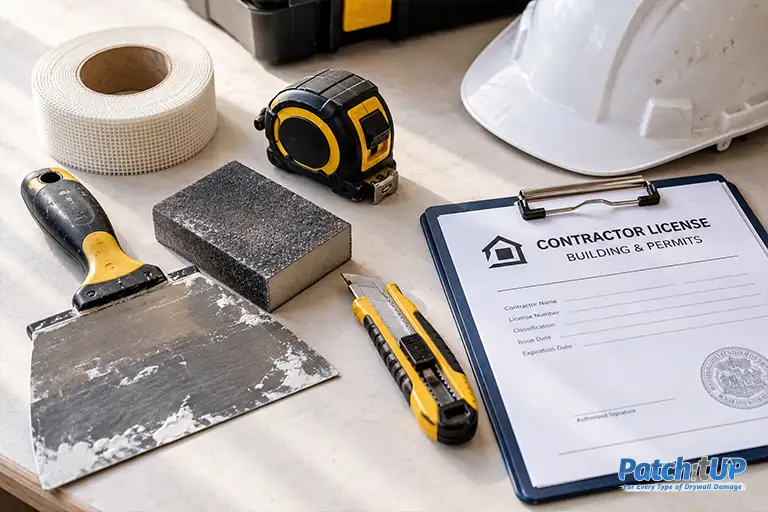
Once you know the market and the money, launching a drywall repair business comes down to three things.
- Get licensed and insured. Rules vary by state. California’s C-9 license, for example, kicks in for jobs over $500 and takes four years of experience plus two exams. Check your own state’s board before you take a paying job.
- Learn the operating side. You don’t need years of drywall experience, but you do need to understand estimating, scheduling, and customer expectations.
- Budget for tools. A truck, basic taping and sanding tools, a license, and general liability insurance typically run 3,000–10,000.
Start Small, Then Grow
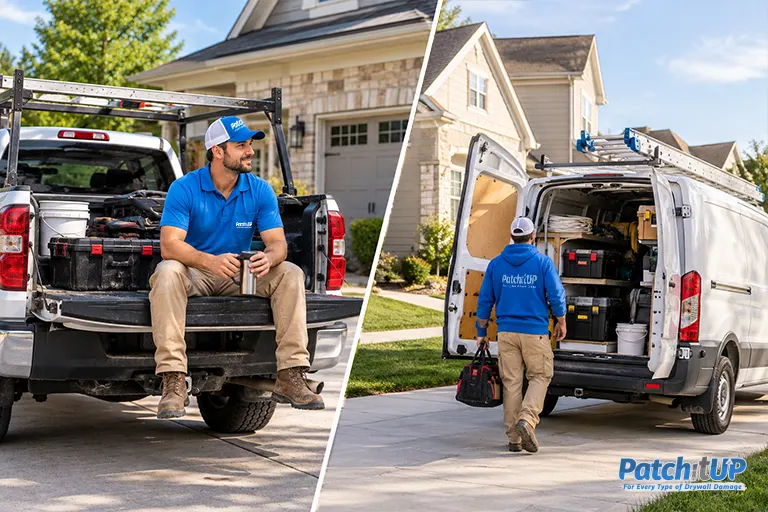
Both paths below can work for a new drywall repair business. The real question is how much you want to build yourself versus plug into.
| Going independent | Franchising |
Startup cost | 3,000–10,000 | 108,750–511,000 (FDD) |
First paying job | You find it | Lead generation included |
Training | Self-taught | Structured onboarding |
Territory | Wherever you can drive | One protected area to start |
Either way, start with one truck and one territory. Learn your local market, your pricing, and your limits before you take on more. PatchitUP, for example, builds its franchise around a single protected territory of roughly 400,000 people, with the option to add more once that first one is running well.
Finding Your First Customers
A drywall repair business earns most of its early work through local search, word of mouth, and relationships with contractors, property managers, and real estate agents, since they all run into drywall jobs they’d rather hand off. Building those early relationships, for any drywall repair business, tends to pay off faster than any ad spend.

Whichever path you choose, treat the first ninety days like a real business: get licensed, get insured, and line up your first three jobs before you quit your day job. If you’d rather not build every piece of that system yourself, franchising is one option worth a look.
Frequently Asked Questions
How much does it cost to start a drywall repair business?
Independently, 3,000–10,000 covers tools, a license, and insurance. Franchising costs more upfront, from $108,750 to $511,000, but it includes built-in training and lead generation (franzy.com).
Do I need experience to start a drywall repair business?
Not necessarily. You can learn on the job, though it’s slower without a system behind you. Franchise training programs are built for people with zero drywall background.
How much can a drywall repair business make?
Installers earn a median of $59,780 a year, according to the BLS. Businesses with repeat accounts or a franchise system behind them often earn well above that.
Is it better to go independent or buy a franchise?
Independent costs less upfront, but you build every system yourself. A franchise costs more but hands you training and a protected territory from day one.